Sump Pump Reviews
How Five Common Pump Models Rate In Our Sump Pump Comparison

Researching Our Sump Systems
At Basement Systems, our full staff of Research And Development experts works every day to identify and improve on the best the industry has to offer.
Our patented systems are time-tested, proven, and just what you need to keep your basement dry -- all the time!
As companies continue to work to build a better sump pump, many different styles and models have begun to fall into place.
The most common of these systems are as follows:
- Pedestal Sump Pumps
- Submersible Sump Pumps
- Water-Powered Sump Pumps
- Battery Powered Sump Pumps
- "Floor Sucker" Sump Pumps
The difference between an effective, reliable system and one that will leave your basement flooded is can be simple as which model of pump you've selected.
A proper sump pump system should have an AC-powered primary pump, an AC-powered secondary sump pump, and a battery backup system.
Below, we've provided a review of the five major designs for sump pumps, and listed the strengths and weaknesses of each. Read on for details on how we've selected the system we use.
At Basement Systems, our experts have successfully waterproofed hundreds of thousands of basements worldwide! Our sump pump systems are time-tested to be reliable, effective, and provided by professional, personal experts.
Our professional on-site estimates are free! We'll stop by your house to inspect and identify the issue, answer any questions you have, and work with you to create a customized basement waterproofing cost estimate! To get in touch with your local dealer, contact us today!
Pedestal Sump Pump Systems

Pedestal sump pumps are mounted above the water line, on a rod or pipe that keeps them raised above water level.
These systems cannot be submerged (or cooled) in water within the sump pit.
(Click each item below for more information.)


How A Pedestal Sump Pump Works
A pedestal sump pump system detects rising water through either a water sensor or a float mechanism that will rise with the water level. As water enters the sump pit and reaches the required level, the system turns on, pumping the water away.
Pedestal Pump Advantages
- High Capacity -- When compared to most other models of sump pump, pedestal systems are capable of pumping out higher volumes of water than most other systems.
- Low Cost -- Pedestal sump pumps are less expensive than competing systems to purchase. Installation of a pedestal sump pump, however, does not have any labor-saving benefit over other models.
Pedestal Pump Disadvantages
- Frequent Malfunctions -- Pedestal systems are typically low-end pumps that are well-known for their breakdowns and failures. Because they are not submersible, they cannot use groundwater to cool them as they operate, which leads to early burnout.
Additionally, the vibrations of pedestal sump pumps during operation tends to make them "wander" in the sump pits. As the systems move to the edges of the pits, the float switches and sensors can be pushed up against the pump liner, which forces them to stay in an "on" or "off" position. - Noisy Operation -- Because the sump pump is raised up into the basement, there is no lid between you and the pump to muffle noise from its operation.
- Allows Odors And Humidity Into The Basement -- Because the motor is raised out of the sump system, there will be no lid on the sump pit. This means that odors and humidity within the pit can easily make its way into the home.
Submersible Sump Pump Systems
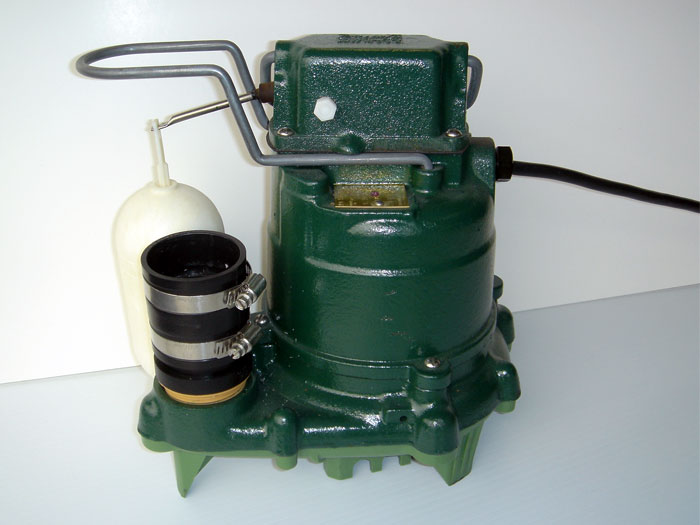
Submersible sump pumps are designed to install directly within the sump pit, immersed in water as they work to keep your basement dry. The most reliable submersible pumps have are designed with a cast-iron motor casing, which allows for maximum heat dispersal.
(Click each item below for more information.)


How A Submersible Sump Pump Works
As the water rises in the sump pit, it raises a floatable switch attached to the sump pump. As the switch rises, the pump turns on, pumping out the water until the switch is lowered to the "off" position. The water that the sump pump is submerged in absorbs the heat created by the pump during its operation, helping to maintain the system.
Submersible Pump Advantages
- High Capacity Operation -- Submersible sump pumps are able to pump the highest volume of water of the sump pump systems listed here. When combined with a battery backup submersible pump, they provide the best protection of available models.
- Long Lifespan -- The cast-iron housing often used around a submersible sump pump's motor will disperse heat naturally into the water for a self-cooling, long-lasting design.
Submersible Pump Disadvantages
- Initial Investment -- While a submersible sump pump will outlast several generations of other pump models, they require a higher initial investment in money.
Water-Powered Sump Pumps

Water-powered pumps are installed out of the sump pit, and run by the town's water supply instead of electricity.
These systems depend on high water pressure to determine their capacity, and cannot run effectively in areas with low water pressure.
(Click each item below for more information.)
How A Water-Powered Sump Pump Works
Like the previous systems, water rising in the sump pit is detected by a sensor or float switch, which turns the system on. Water pressure provides power to this system, which then begins to pump water out of your basement. Several gallons of town water will need to be discharged for each gallon of groundwater removed.
Water-Powered Pump Advantages
- Runs Without Electricity -- Well, runs without electricity in YOUR home. Water-powered pumps operate by using the town's water pressure to power the system -- allowing them to operate even when you lose power. You can expect 3-5 gallons to be wasted for each gallon of groundwater discharged.
- Long Lifespan-- These pumps are reliable, long-lasting, and durable. You can expect the system to continue to operate for many years to come.
Water-Powered Pump Disadvantages
- Low Pumping Capacity-- Water-powered systems tend to operate at a very low capacity. If you have heavy rains or a high water volume, these systems may become overwhelmed.
- Requires High Home Water Pressure-- The power of this system is completely dependent on how strong your home's water pressure is. If you live in a house with lower water pressure, your system's performance potential is greatly reduced. If your house experiences a temporary loss of water pressure, this will also affect its operation.
Battery-Powered Sump Pump Systems

Battery-powered sump pumps operate off of DC power, allowing them to run during power outages. These are generally used as backup systems.
This category does not include AC-powered sump pumps that run with a DC backup system.
(Click each item below for more information.)
How Battery-Powered Sump Pumps Work
Like most other sump pumps, a battery-powered pump operates by a float switch. In cases where this is used as a backup system (most common), that float switch would be located at a higher point than the one that would turn on the primary pump.
Battery-Powered Pump Advantages
- Can Operate During Power Outages -- The primary pump can lose power during power outages, blown fuses, or when someone unplugs the pump and forgets to plug it back in.
- Can Operate During Pump Failure -- A battery backup sump pump is a second line of defense when a primary sump pump overheats, becomes clogged, or experiences some other mechanical failure.
- Can Assist During Heavy Water Volumes -- Unusually high volumes of water can cause a primary sump pump to be overwhelmed. A battery backup system can kick on during these times to give that much-needed extra boost of power.
- Possible Compatibility With Alarm System -- Some battery backup sump pumps can be connected to home alarm systems, notifying you when they're in operation so you can respond as soon as possible.
Battery-Powered Pump Disadvantages
- Low Pumping Capacity -- Like water-powered sump pumps, battery backup pumps tend to operate at a lower capacity than a primary pump system. If you have heavy rains or a high water volume, these systems may become overwhelmed.
- Limited Operating Life -- These pumps operate on a limited lifespan -- one that varies drastically based on the battery's quality and capacity, and especially on the volume of water that is flooding into the sump pit.
"Floor Sucker" Pump Systems
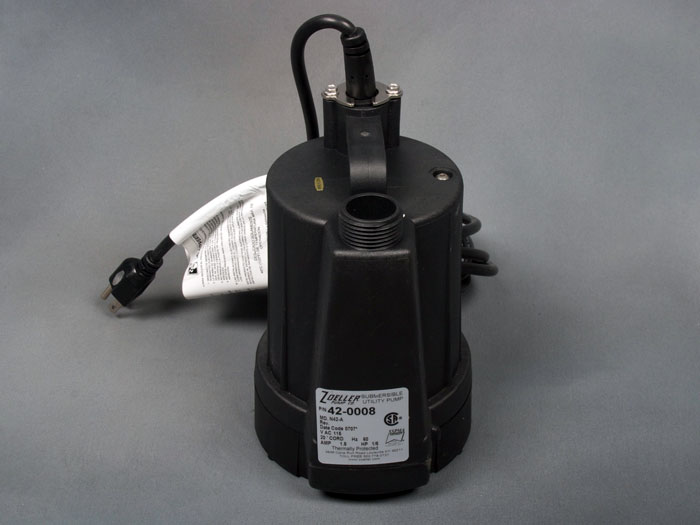
This kind of pump is often used by contractors and homeowners as an emergency option to eliminate water before installing a better system.
The pump sits on the floor, "sucking" water from the basement out through a discharge line.
(Click each item below for more information.)

How "Floor Sucker" Pumps Work
These pump systems are used directly on the floor -- with no sump pit or perimeter drain necessary. They simply plug in and run, sucking most of the water off a basement floor in a space that's already flooded. They typically do not turn on and off automatically, so manual operation and supervision will often be needed each time the space floods.
"Floor Sucker" Pump Advantages
- Requires No Sump Pit or French Drain -- "Floor Suckers" are ready to work immediately, and sit directly on the basement floor as they operate. You will not need to install a perimeter drain or sump pit.
- No Installation Time -- Because these systems can be used easily and immediately, they are a great option for emergency use, or to clear out flooded waters before installing a different, more permanent system.
"Floor Sucker" Pump Disadvantages
- Does Not Stop Flooding -- This system can only be used after your basement is flooded by more than 1/8" of water. Likewise, this system will not be able to remove all water on a basement floor.
- Low Capacity -- These are cheap, low-end sump pump systems that will not be able to handle high volumes of water -- and they're not designed for long-lasting operation.
- Loud Operation -- This is a loud system! The pump operation, sucking sounds of the water removal process, and improvised discharge line will all make for a noisy, disruptive job.
We Install Patented Sump Pump Systems!
At Basement Systems, we provide complete, patented sump pump systems that are ideal for creating and maintaining a dry, usable basement. Our systems, complete with a full-perimeter drainage system, can be installed in your home in one, perhaps two days.
Whether your home is in Canada or the United States, our locally owned and operated dealers are here to help you! To get in contact with your local experts and schedule a free sump pump installation estimate, contact us by phone or e-mail today!
Each free estimate includes an on-site inspection and measurement from one of our professionals. We'll explain what caused the issue, answer any questions you may have, and make recommendations about the best options for your unique situation. We'll also work with you to create a customized basement system that accomplishes everything you'd like for that space.
As an added courtesy, we like to send along a copy of our full-color basement book -- Basement Waterproofing Science. This is a powerful reference tool that's packed with everything you need to know about waterproofing your home -- including details about our warrantied products and services. Contact us today to get started!
Our innovative and forward-thinking approach to designing products has solved wet basement problems that the basement waterproofing and crawl space industry has faced for decades, and our patented sump pump systems are the smartest and most reliable. Plus we listen to our customers and respond accordingly! Basement Systems Inc. has been awarded 24 Patents and 19 Innovation Prizes on waterproofing products we use every day, including a battery back up sump pump system. This approach ensures the best waterproofing systems and solutions available.