Drain Pipe Installation
Installing A Perimeter Drainage System To Waterproof Your Basement

A perimeter drain system and sump pump is the most effective way to collect water building around your foundation and send it away from your basement or crawl space.
The key to a good basement waterproofing system is to properly install a well-designed drainage system.
A good drainage system should be clog-resistant, installed above the mud line, and possible to maintain should an issue arise. It should also be able to collect water from the basement walls, while leaving no open gap along the concrete slab that can clog with dirt and debris from the basement floor.
Professional Drain Pipe Installation
Installing drain pipe in a basement is a job that's best done as a professional wet basement service, using heavy equipment and high-quality products. A crew of experts should usually be able to install a complete drain system in less than two days.
At Basement Systems, our professional installations include a lifetime limited warranty, provided in writing and transferable to the next homeowner. You'll appreciate this, should you decide to sell the house.
Your local Basement Systems dealer can provide you with a warrantied installation of one of our award-winning drainage systems. You'll love the way our drainage systems can transform your basement into dry, usable space!
To schedule your a free basement drain installation estimate, contact us by phone or e-mail today! Our dealers proudly serve throughout Canada and the United States -- we have a locally owned and operated expert working in your neighborhood!
Steps To Installing A Basement Drain System
At Basement Systems, we endorse installing basement drain systems from the interior perimeter, rather than from the exterior. We find that these installations are faster, less expensive, and much less prone to clogging, as the drain is installed outside of the mud.
Our experiences in waterproofing hundreds of thousands of basements across North America and Canada for more than two decades are proof that these systems are reliable and effective in waterproofing basements.
To install a perimeter drain system, we take the following four steps:


Jackhammer The Floor's Perimeter
A section of the basement floor around the perimeter will be jackhammered out, and the concrete is removed. A drainage ditch is created underneath your slab floor.
In the lowest point on your basement floor, a sump pit is created, and a durable plastic sump pump liner is set in place within the pit.
A drain pipe installation may generate some dust -- our contractors are careful to keep this to a minimum. A hard, thick floor will create more dust than a thin one.
Before your installation, we'll also mail ahead a brochure with some tips that will help protect your valuables and will help to keep dust out of your home.

Install The Drain System & Pump
To aid with drainage and to keep dirt out of the drain, we pour a bed of clean stone underneath each drain channel. We also pour stone around the sump pump liner.
Our award-winning drainage system is then placed on top of the stone, with the wall flange extending upwards to about 3/8" above the floor line. This will allow the drain any water that may leak from the walls.
If you have concrete block foundation walls, water can collect in the cavities of each block. To address this, our installers will drill a "weep hole" in each block, which directs the water towards the perimeter drain system.
Periodically in the drain line, we will also install an access port that allows for service and inspection of the system.
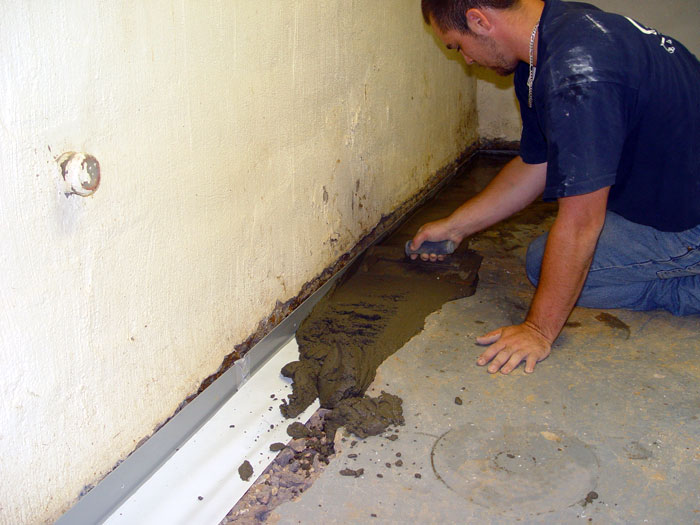
Restore The Floor
Once the drain is set in place, we'll fill in any gaps along the edge of the system with more drainage stone. Typically, we pour drainage stone on top of the drain itself as well.
We want your system to be subtle and as attractive as possible in your home. Once the drain is in place, our contractors will place new concrete over the top of the drain system and around the sump pit, carefully smoothing it over for finished, professional floor restoration.
This newly placed concrete will need a little time to cure. We recommend giving it at least three days to cure before putting boxes over the space. Ask your dealer for specifics about the curing time for your floor.

The Cleanup
Many homeowners are surprised by how much waste is created by jackhammering the floor and digging out the drainage trench -- that's a lot of concrete!
During the installation process, our contractors will carefully remove any waste created during the installation, loading it up in a truck and removing it as a complimentary part of our service.
Our goal is to leave your home looking better than when we first arrived. To make sure that you're satisfied with the completed job, we make it our policy to call a day or two after the installation to hear your comments and to make sure that everything was taken care of to your satisfaction.
More About Foundation Waterproofing
There are a lot of wet basements out there -- and a lot of contractors who say their method of basement waterproofing is the best around.
We've carefully considered each waterproofing system on the market and weighed the options and alternatives carefully -- if we found one that worked better than ours, we'd switch!
What makes our drain systems better than the alternatives? The articles that follows shed some light on what's behind our choices for basement drainage.

Foundation Waterproofing Options
Should the basement be waterproofed from the inside or outside of the foundation? This has proven to be one of the most heated debates that drainage system installers have.
In this article, we cover the pros and cons of both techniques -- waterproofing from the inside, and installing drain from the outside of the foundation.
Highlights:
- Pros and cons of exterior excavation
- Advantages and disadvantages of interior drain systems
- Installing drains in the "mud zone"

Generic Drain -- Or The WaterGuard® System?
What makes one drain better than another? The shape is different, but does it really perform better than a traditional round drain pipe?
This article compares and contrasts our patented drain system with the more conventional round PVC pipe system.
Highlights:
- Potential issues with PVC pipes in basements
- Advantages to the WaterGuard®™ drain system
- Why hire a professional waterproofer?

Installing Weeping Tile Systems That Last
A proper, professional installation of a drain system makes all the difference in the world. Full-time waterproofers have seen firsthand what keeps a basement dry -- and what leads to flood.
In this article, we share some insider tips on what makes one perimeter drain better than the others.
Highlights:
- What makes an effective drain system
- Common mistakes when designing a perimeter drain
- A chart outlining the strengths and weaknesses of seven different basement drain systems
We Can Waterproof Your Foundation!
We've put a lot of thought into our basement drain systems, and we're proud to say that they've successfully waterproofed basements in hundreds of thousands of homes worldwide.
Our warrantied drainage systems are just what you need to transform your wet basement into dry, usable space. And with our written, transferable warranty, you'll have peace of mind, as well as a great selling point should you decide to put your home on the market in the future.
To schedule a free, no-obligation drain pipe installation estimate, call or e-mail us today! Your free estimate will include a professional on-site inspection, a cost estimate on a customized waterproofing system, and a full-color copy of our basement waterproofing book!
Looking for a price? Get a no cost, no obligation free estimate.